
Emergency Treatment of PFAS Contaminated Flood Water
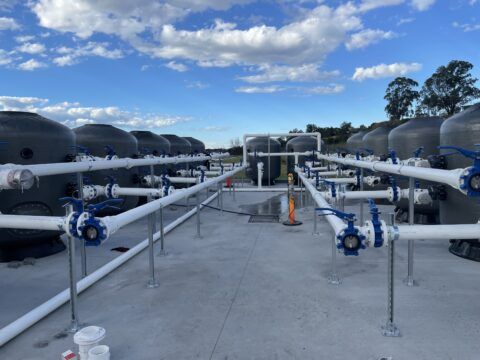
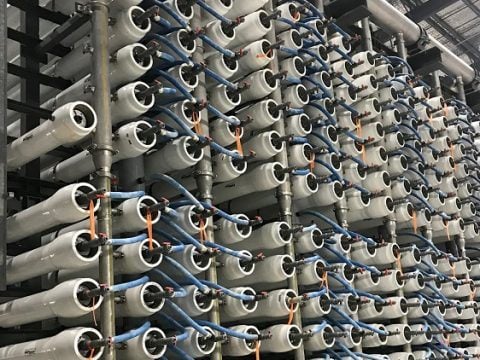
City Water Technology was engaged by Veolia Environmental Services to provide specialist process, project management and operations support for an emergency PFAS water treatment plant in Sydney.


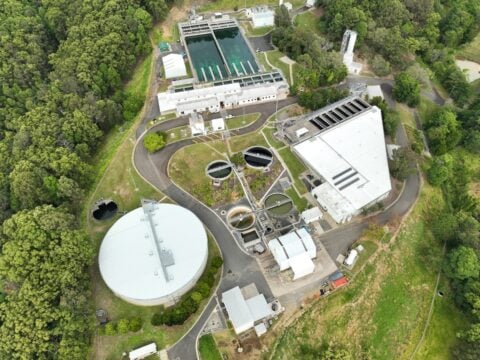
CWT was engaged by Seqwater to support the development of a data-driven dynamic modelling framework for water treatment plant process assessment and optimisation. The project combines AI-driven water quality forecasting with a comprehensive process unit library to support decision-making across both short-term operations and long-term infrastructure planning.
Process assessment methodology review and improvement:
Process unit library development:
Seqwater’s existing steady-state process assessment approach was limited in its ability to anticipate rare or unprecedented water quality events — conditions expected to increase in frequency under climate change. A dynamic modelling framework was required to forecast raw water quality from environmental inputs and predict treatment plant performance across a broad range of scenarios, including extreme events not well-represented in historical data.
CWT’s engagement spans two concurrent workstreams. Task A focuses on ensuring the AI modelling framework — which uses machine learning to forecast raw water quality and identify distinct water quality scenarios — is built on a foundation of sound process engineering logic. This involves reviewing Seqwater’s Process Assessment Framework, evaluating the preliminary dynamic modules, conducting gap analysis, and generating synthetic datasets for training/validation.
Task B is building a structured process unit library covering conventional, advanced, and novel treatment technologies across 34 water quality constituents. For each process unit, CWT is developing datasheets, treatment effectiveness functions, and CAPEX/OPEX cost curves with project-specific adjustment factors for greenfield/brownfield context, infrastructure complexity, integration difficulty, and access constraints.
The integrated framework is intended to give Seqwater a flexible, predictive platform for assessing treatment resilience and vulnerability under a wide range of raw water conditions — including future climate scenarios. The process unit library will provide a standardised, evidence-based resource for scenario analysis, treatment optimisation, and asset investment planning across Seqwater’s network.