Emergency Treatment of PFAS Contaminated Flood Water
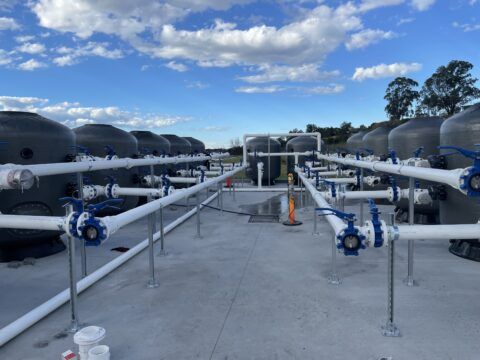
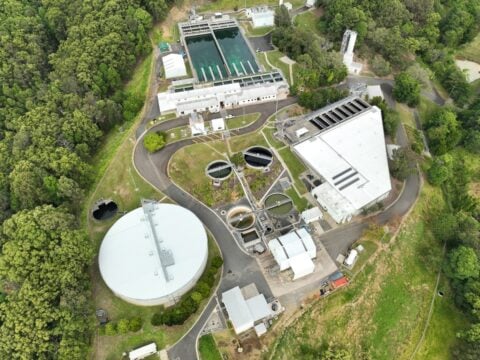
City Water Technology was engaged by Veolia Environmental Services to provide specialist process, project management and operations support for an emergency PFAS water treatment plant in Sydney.


CWT was engaged by Seqwater to support the development of a data-driven dynamic modelling framework for water treatment plant optioneering, planning, process and capacity assessments, and plant optimisation. The project combines a comprehensive process unit library of first-principles engineering equations with long-term historical plant data to support decision-making across both short-term operations and long-term infrastructure planning. Full adoption of the DDM is pending completion of Seqwater’s assurance review, which is scheduled for completion calendar year 2026.
The Data-driven Dynamic Model (DDM) is a data-driven process model of Seqwater’s water treatment plants, brought together in a single application. The DDM framework is intended to provide the capability required to streamline process and capacity assessments across Process Engineering teams. Users assemble a plant from calibrated unit-process building blocks: coagulation, clarification, filtration, disinfection, etc, and run it against measured or forecast raw water quality to predict treated water quality, plant capacity, chemical demand and operating cost.
Rather than relying on fixed assumptions, every result traces back to a documented engineering equation (e.g. mass balance, reaction kinetics, hydraulics). The performance of each process unit (i.e. the relevant engineering equations) is calibrated against each plant’s own operational records (plant data logs, laboratory data), so plant capability, water quality outcomes and costs can be assessed on demand for any raw water quality envelope, flow and operating mode. This enables replacement of periodic, consultant-led studies with a data-driven tool that produces auditable calculations and reports, and that can be extended with new processes, cost data and water quality limits without code.
Process assessment methodology review and improvement:
Process unit library development:
Cost modelling:
Verification and validation:
Project delivery and stakeholder support:
Seqwater’s existing steady-state process assessment approach had limited ability to anticipate rare or unprecedented water quality events, conditions expected to become more frequent under climate change. A dynamic modelling framework was needed to predict treatment plant performance across a broad range of scenarios, including extreme events that are poorly represented in historical data.
CWT’s engagement covered two workstreams running in parallel.
The first focused on reviewing Seqwater’s Process Assessment Framework, assessing the needs of future users, running a gap analysis, and generating synthetic datasets for training and validation. This was followed by development of the modelling methodology, research and development of engineering calculations and models, and work on the model with the Seqwater team.
The second built a structured library covering 45 process units including conventional, advanced, and novel treatment technologies across 34 water quality constituents. For each process unit, CWT developed datasheets, treatment effectiveness functions, and CAPEX/OPEX cost curves, with project-specific adjustment factors for greenfield or brownfield context, infrastructure complexity, integration difficulty, and access constraints.
The integrated framework gives Seqwater a flexible, predictive platform for assessing treatment resilience and vulnerability under a wide range of raw water conditions, including future climate scenarios. The process unit library and costing module provides a standardised, evidence-based resource for scenario analysis, treatment optimisation, and asset investment planning across Seqwater’s network.
More broadly, the DDM converts periodic, consultant-led, spreadsheet-based assessments into a data-driven tool that is faster, cheaper, more transparent and more trusted, and that serves operations, planning and water security teams from a single source of truth.

Engineering Manager

Process Engineer
Specialist Process Engineer
Process Scientist
Managing Director
Senior Process Engineer
Senior Research Scientist
Process Engineer
Process Engineer

Graduate Process Engineer
Process Engineer
Specialist Process Engineer